News & Insights
Beyond Material Cost: The Real ROI of Fabric Ducting in Commercial HVAC
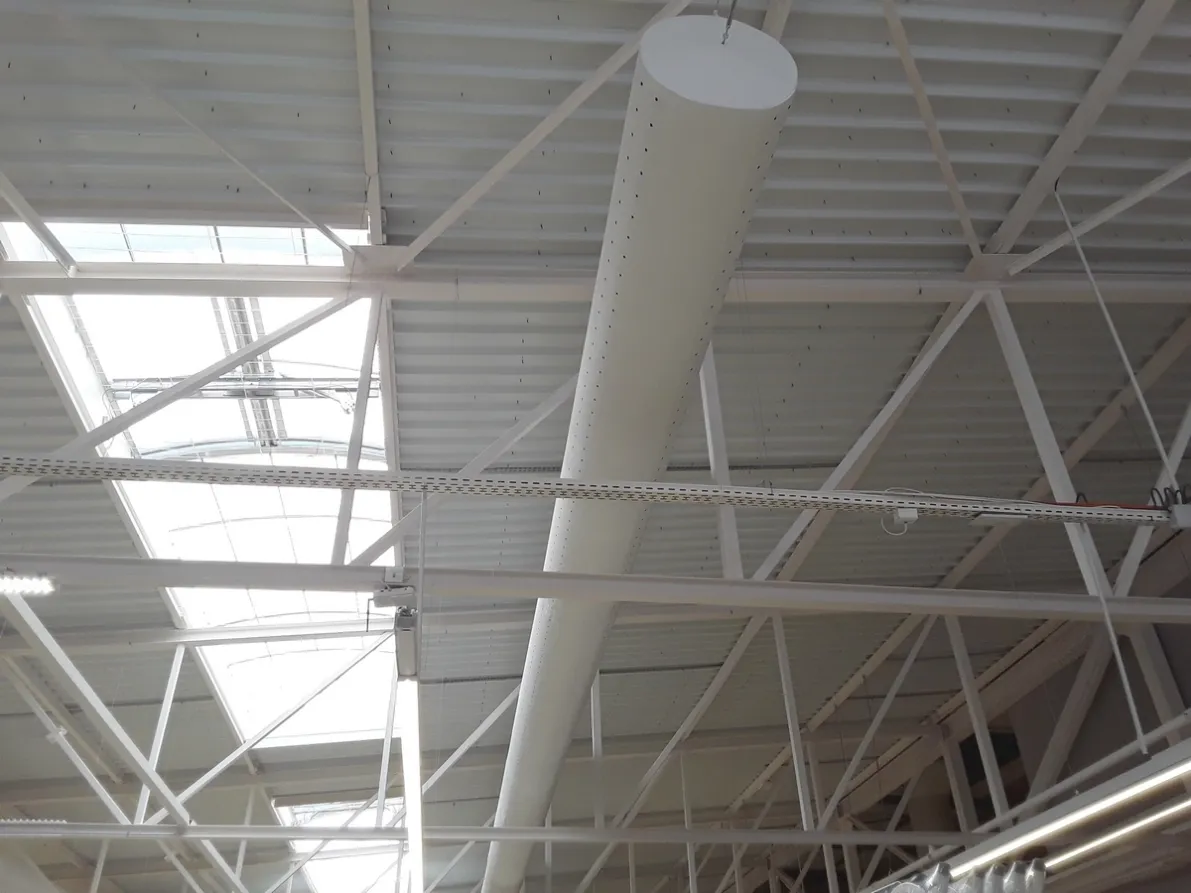
When MEP contractors evaluate ductwork for a commercial or industrial build, material line items are only half the picture. The true measure of a ducting system’s value lies in total installed cost—including labor hours, equipment rental, structural reinforcement, and commissioning complexity.
While traditional sheet metal ducting has been the default specification for decades, fabric air dispersion systems are rapidly becoming the preferred choice for contractors focused on protecting margins and hitting tight project deadlines. Here is why the practical ROI of fabric ductwork goes far beyond the initial quote.
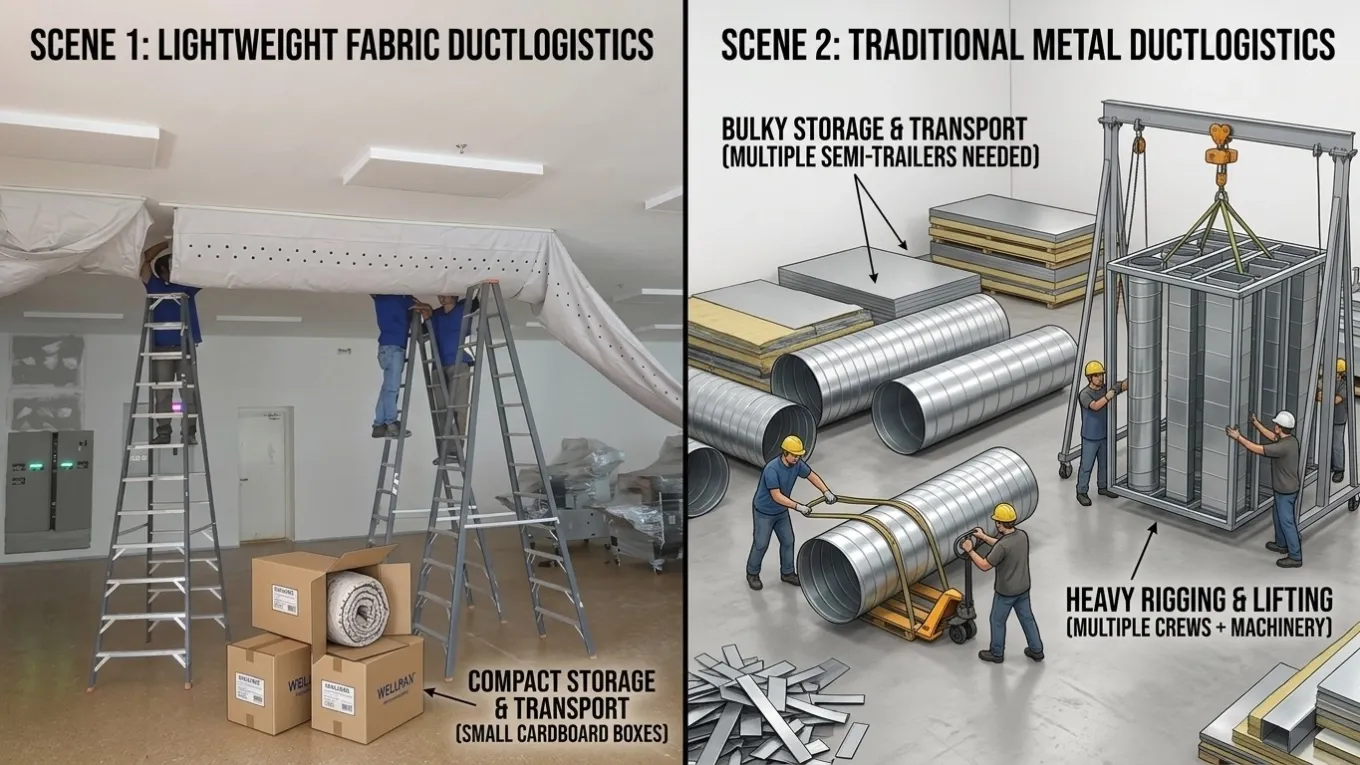
1. Cutting Labor Hours on the Job Site
Labor is consistently one of the most volatile variables in MEP contracting. Installing traditional metal ducting requires heavy lifting, multi-person crews, field cutting, wrapping insulation, and tedious sealing at every joint.
Fabric systems streamline this entire process:
- Lightweight Handling: Fabric ducting weighs up to 90% less than spiral or rectangular metal ducting. A single installer can comfortably handle long runs without heavy rigging or multiple lifts.
- Track or Cable Suspension: Hanging system tracks or tension cables is straightforward and requires significantly fewer structural attachment points.
- Modular Assembly: Zippered sections and pre-engineered fittings mean runs are assembled in minutes rather than hours, reducing overhead labor by up to 60–70%.
2. Built-in Insulation and Condensation Prevention
In cooling applications, uninsulated sheet metal ductwork inevitably condensation-sweats, requiring secondary external insulation wrapping. This adds material cost, extra trades on site, and extended project timelines.
Permeable fabric ducting eliminates this step entirely. By allowing a controlled amount of conditioned air to pass through the fabric weave itself, it creates a continuous air boundary layer along the outer surface. This prevents temperature differentials from reaching the dew point, effectively eliminating condensation risk without the need for expensive outer insulation wrap.
3. Freight, Logistics, and Jobsite Storage
Transporting rigid metal ductwork means paying to haul empty air. Bulk shipments require multiple flatbeds, significant freight expenditure, and vast staging areas on job sites where space is often at a premium.
Fabric duct systems are packaged in compact boxes. An entire factory or stadium system can often arrive on a few standard pallets. This drastically lowers freight costs, minimizes site congestion, and reduces the risk of material damage during transit or storage.
4. Simplified Commissioning and Balancing
Balancing traditional air systems with multiple branch dampers and diffusers is time-consuming and often unpredictable. Because fabric air dispersion systems deliver uniform airflow through pre-engineered linear vents or micro-perforations along the entire length of the duct, system pressure remains consistent. Air balancing becomes significantly simpler, allowing contractors to hand over projects faster and with fewer call-backs.