News & Insights
Engineering Clean Air: Why Fabric Air Dispersion Belongs in Hygiene-Critical Facilities
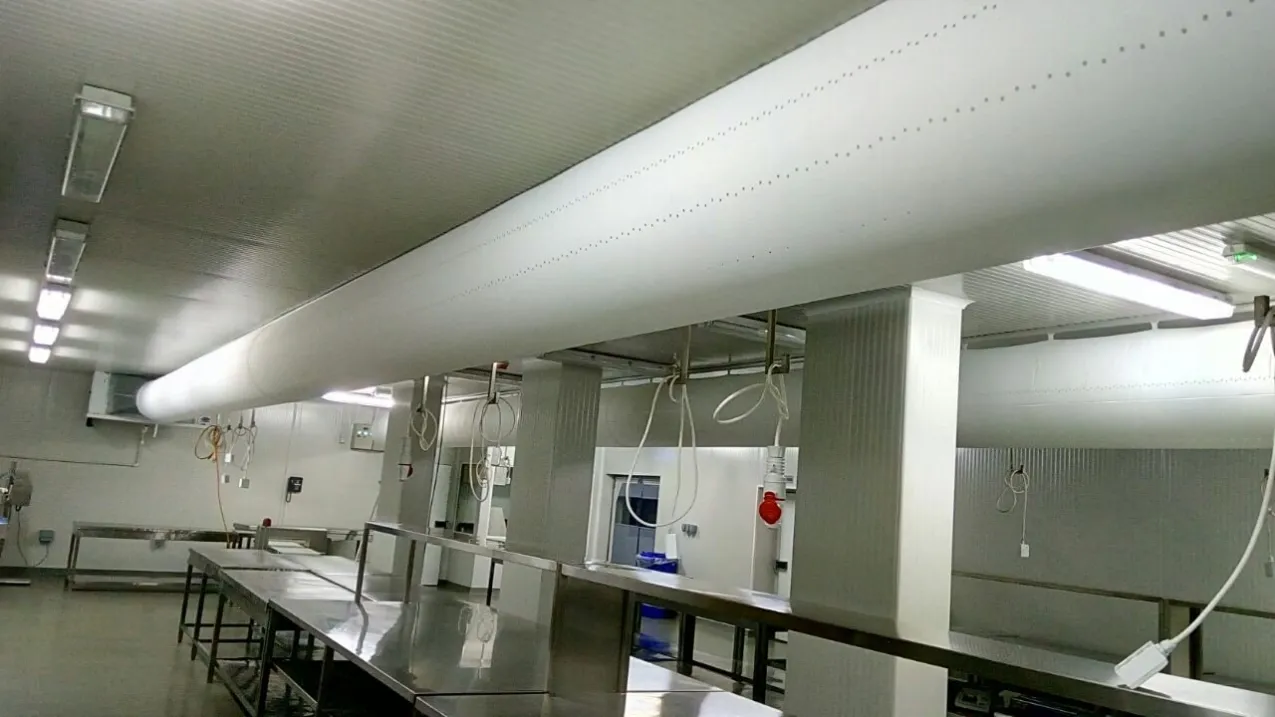
Maintaining strict environmental standards in food processing plants, cold storage facilities, and pharmaceutical environments presents a unique set of HVAC challenges. High humidity, stringent sanitation protocols, and the risk of airborne contaminants require air distribution systems that do not compromise on hygiene or performance.
In these specialized applications, conventional metal ductwork often becomes a maintenance bottleneck. Here is how modern fabric air dispersion technology solves the most critical hygiene and environmental requirements.
1. Zero Mold and Condensation Risks
In high-humidity environments like meat processing or cold storage facilities, traditional metal ductwork is prone to surface condensation. Dripping water is more than a nuisance—it is a serious food safety hazard that can contaminate production lines and foster bacterial growth.
Air-porous fabric ducting prevents condensation at the source. The micro-permeable fabric continuously releases a uniform cushion of air across its external surface, ensuring moisture cannot settle on the duct exterior regardless of ambient humidity changes.
2. Full Washability and Easy Sanitation
Clean-in-place protocols are essential in regulated facilities. Metal ducts feature interior joints, seams, and metal diffusers that trap dust, organic particles, and moisture over time—making deep cleaning nearly impossible without dismantling rigid structures.
Fabric duct systems offer an elegant maintenance solution:
- Quick Dismantling: Zip-in, zip-out sections allow maintenance teams to take down large duct runs in a fraction of the time required for metal.
- Launderable Fabric: Industrial fabric ducting can be machine-washed and sanitized using standard commercial detergents or anti-bacterial washing processes.
- Antimicrobial Fabrics: Premium fabric options are treated with integrated antimicrobial agents that actively inhibit fungal and bacterial growth between wash cycles.
3. Draft-Free, High-Volume Air Exchange
In processing rooms where employees work in low ambient temperatures, high-velocity air drafts from traditional metal grilles cause severe worker discomfort and health complaints. Conversely, stagnant air pockets can violate humidity control standards.
Fabric systems distribute air evenly across the entire room length using low-velocity porous dispersion or precise micro-perforations. This ensures high air exchange rates (ACH) and precise temperature control without creating cold drafts or localized turbulent air currents.
4. Compliance with Global Hygiene Standards
Modern technical fabrics are engineered to comply with strict international fire, safety, and hygiene standards (including UL 723, NFPA 90A, and Class B-s1,d0 certifications). For engineering contractors delivering turn-key projects in food and beverage production, specifying cleanable fabric ductwork ensures full compliance with global auditing standards like USDA, FDA, and HACCP.